
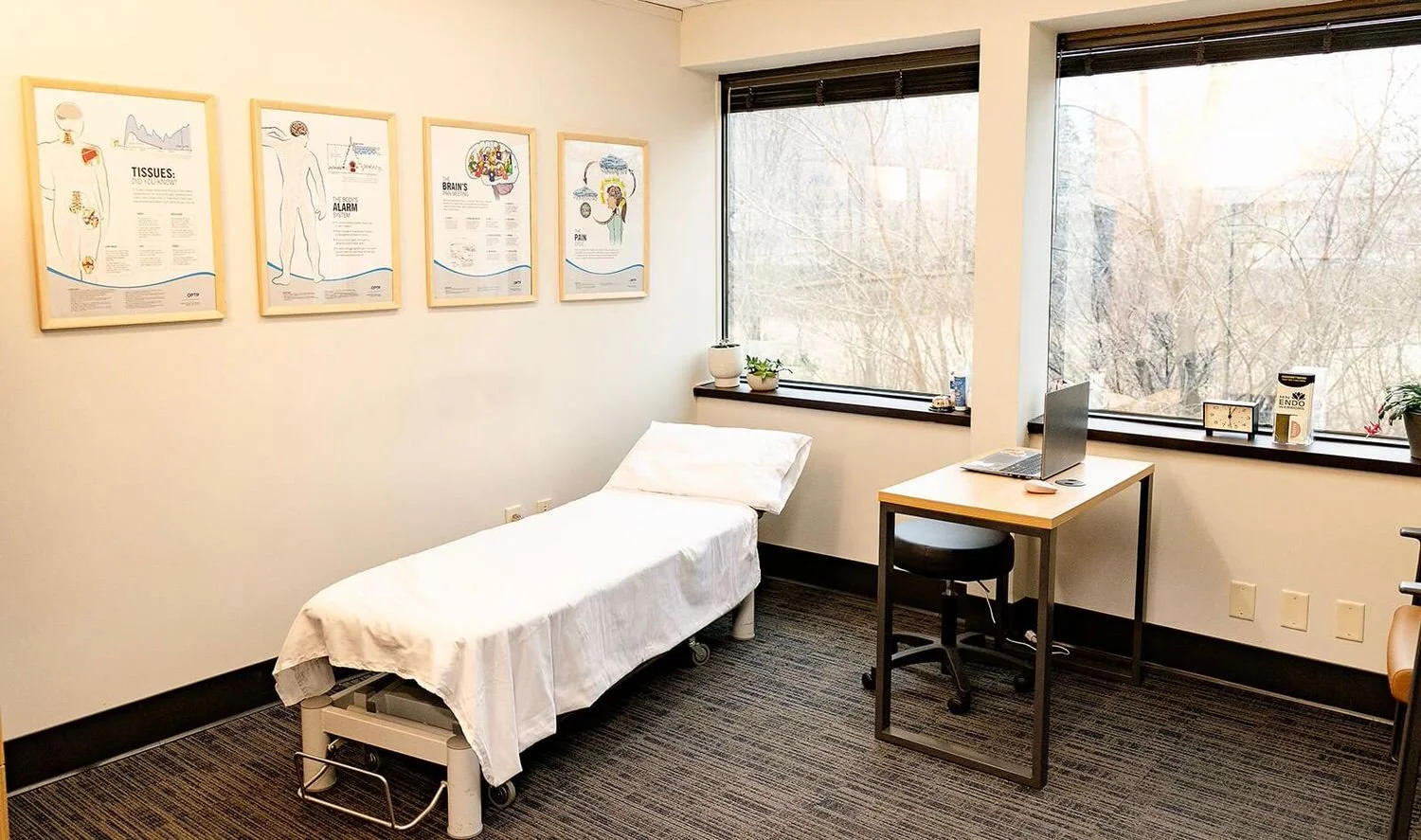
Endometriosis Pelvic Floor Physical Therapy in Edina, MN
What Is Endometriosis?
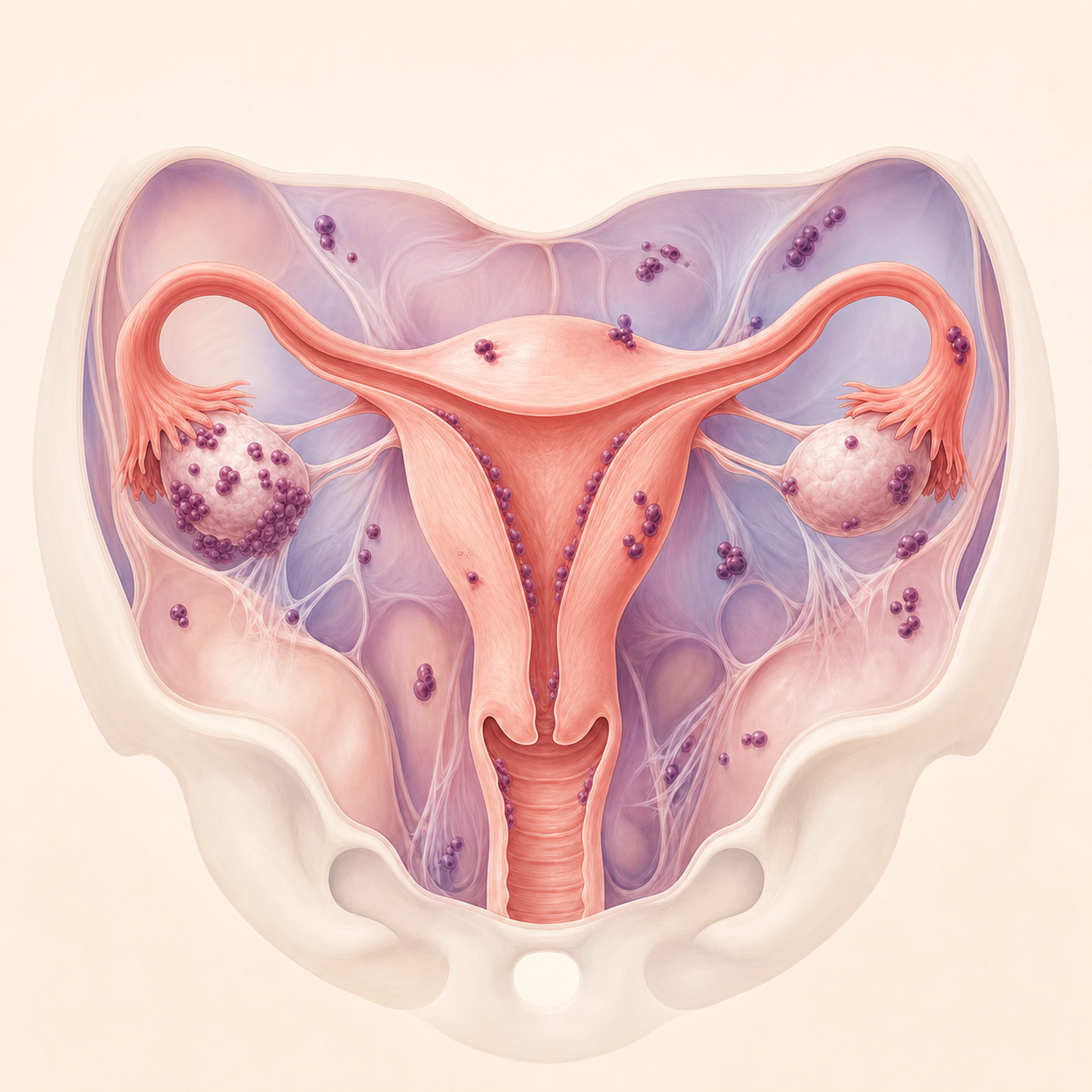
Endometriosis is a chronic, systemic, inflammatory disease process characterized by the presence of endometrial-like tissue outside of the uterus, most commonly found in the peritoneal cavity, ovaries, and deep pelvic structures. It involves multiple systems of the body, is influenced by hormones (progesterone & estrogen), involves immune dysregulation, and can cause adhesions and scar tissue.
Endometriosis is a condition in which tissue similar to the uterine lining grows outside the uterus, on the ovaries, fallopian tubes, bladder, bowel, or pelvic wall. This tissue responds to monthly hormonal shifts, causing inflammation, scar tissue, and chronic pain.
Endometriosis affects an estimated 1 in 10 women. Diagnosis is often delayed by 8-12 years, and patients are frequently told their pain is “just bad periods” long before the underlying disease is recognized.
Common symptoms include:
- Painful periods (dysmenorrhea) that worsen over time
- Chronic pelvic pain not tied to your menstrual cycle
- Pain during or after sex (dyspareunia)
- Painful bowel movements or urination, especially around your period
- Bloating (“endo belly”), fatigue, and digestive symptoms
- Difficulty conceiving
How Pelvic Floor Physical Therapy Helps Endometriosis
Pelvic floor physical therapy is not a cure for endometriosis, the disease itself often requires excision surgery and a multidisciplinary care team. What PT does address is the substantial muscular and fascial dysfunction that develops alongside endometriosis and that frequently outlasts treatment of the disease itself.
- Pelvic floor muscle tension and trigger points. Years of pain teach the pelvic floor to guard. Hands-on manual therapy helps these muscles release.
- Hip, low-back, and abdominal restrictions. Adhesions and scar tissue can pull on connective tissue throughout the abdomen and pelvis. Visceral mobilization and myofascial work reduce that tension.
- Pain education and nervous-system retraining. Chronic pelvic pain rewires how the nervous system interprets sensation. PT includes education and gentle exposure to help your body interpret movement and touch as safe again.
- Bowel and bladder symptoms. Many people with endometriosis develop secondary urinary urgency, constipation, or painful voiding. Pelvic floor PT addresses these directly.
- Pre- and post-excision support. If you’re preparing for or recovering from excision surgery, PT can support better outcomes, restoring mobility, reducing scar tightness, and getting you back to normal life.
Why an iCareBetter-Vetted Provider Matters
iCareBetter is a vetted directory of providers who have demonstrated specialized training in endometriosis care. Dr. Bethany Hansen is iCareBetter-vetted as a pelvic floor physical therapist, meaning her clinical depth in endometriosis care has been independently reviewed through their double-blind peer-review process. The directory exists because most general practitioners and many PTs lack the training to recognize or appropriately treat endometriosis-related pain.
What Treatment Looks Like
- First visit (60 minutes): Full assessment of your pain history, surgical and medical history, current symptoms, and a careful physical exam. Together we’ll build a treatment plan that fits your goals.
- Follow-up sessions (60 minutes): A blend of internal and external manual therapy (only with explicit consent, never assumed), targeted movement, breathwork, and education. Sessions are always one-on-one and never feel rushed.
- Outside of sessions: A simple home program that fits your real life, no overwhelming printout of 30 exercises.
Endometriosis & Pelvic Floor PT FAQs
Do I need a referral to start pelvic floor PT for endometriosis?
No. Minnesota allows direct access to physical therapy, you do not need a doctor’s order to begin.
Will pelvic floor PT cure my endometriosis?
No therapy, surgical or otherwise, is a guaranteed cure for endometriosis. PT addresses the muscular and fascial pain that almost always accompanies endo and can meaningfully reduce day-to-day suffering. It works best alongside a broader care team.
How long until I notice change?
Many patients notice meaningful change within 4-6 weeks of consistent care, though endometriosis is typically a long-term condition that benefits from ongoing management.
Can I do PT during a flare?
Yes, and it’s often the most useful time to come in. We adapt the session to what your body can tolerate that day.
Helpful Articles From the Blog


Ready to Get Started?
Schedule your 60-minute evaluation with Dr. Bethany Hansen, DPT.
No referral needed.